Master this easy sourdough garlic bread recipe with step-by-step instructions, ingredient science, and variations like cheesy garlic sourdough bread or garlic herb sourdough bread. Perfect for beginners seeking a homemade garlic sourdough loaf with crisp edges and soft crumb.
Table of Contents
Easy Sourdough Garlic Bread: A Tangy Twist on a Classic Favorite
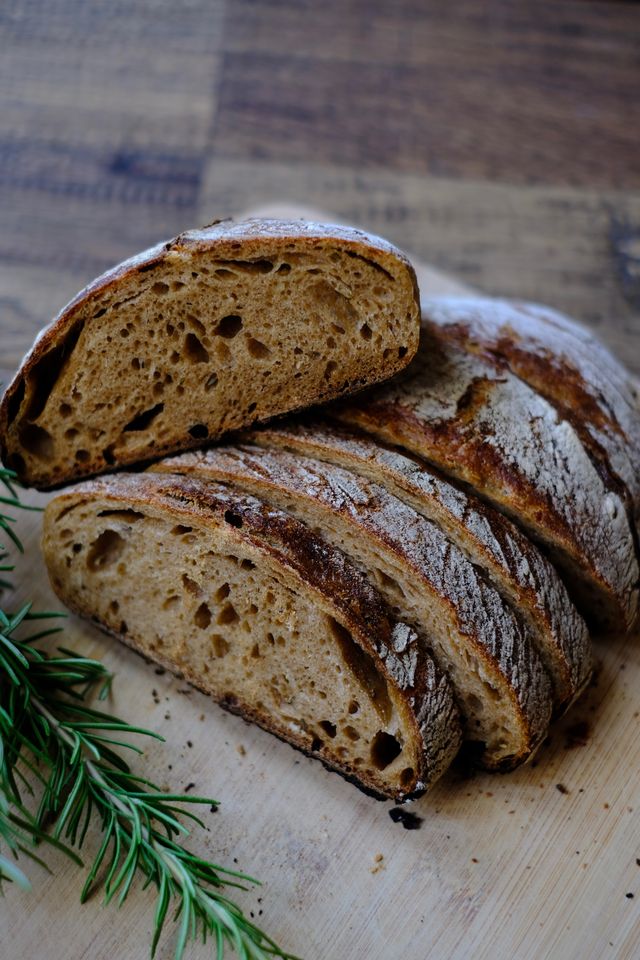
Easy sourdough garlic bread brings together the complex tang of naturally leavened dough with the rich, aromatic appeal of roasted garlic and savory herbs. This recipe creates a homemade garlic sourdough loaf with a crisp, golden crust and a soft, airy interior infused with garlic butter. It stands out as an excellent side for pasta, soup, or a standalone appetizer that never fails to impress.
The balance of sourdough fermentation and garlic creates depth that commercial versions rarely match. Bakers appreciate how the natural acidity cuts through the richness of the garlic butter bread while enhancing overall flavor.
Ingredients
Method
- Make the Levain
- Mix starter, flour, and water. Cover and let ferment 4–6 hours until doubled and bubbly.
- Autolyse
- Combine flours and water. Mix until no dry flour remains. Cover and rest 45–60 minutes.
- Mix the Dough
- Add levain, salt, and honey. Knead/fold with wet hands for 6–10 minutes until smooth. Target dough temperature: 76–78°F (24–26°C).
- Bulk Fermentation
- Rest 30 minutes, then perform 5–6 stretch-and-folds every 30 minutes for the first 2.5 hours. Continue fermenting 5–7 hours total until dough has risen 60–80% and feels airy.
- Pre-shape & Bench Rest
- Fold into a loose round. Rest 25–35 minutes.
- Final Shape
- Shape into a boule or batard. Place seam-up in a floured banneton.
- Final Proof
- Proof 1–2 hours at room temperature or 8–16 hours in the refrigerator.
- Bake
- Preheat oven and Dutch oven to 450°F (232°C). Score loaf. Bake covered 20 minutes, then uncovered at 425°F (218°C) for 22–28 minutes until internal temperature reaches 205–210°F (96–99°C).
- Add Garlic Butter
- Mix roasted garlic with butter, herbs, cheese, and seasonings. Spread on loaf 5 minutes before baking ends. Return to oven to finish browning.
- Cool
- Cool completely on a wire rack for at least 2 hours before slicing.
Notes
- For sourdough discard garlic bread: Replace levain with 180g discard + 4g instant yeast. Shorten bulk fermentation.
- For cheesy garlic sourdough bread: Add extra Parmesan or mozzarella cubes into the dough.
- For garlic sourdough bread sticks: Divide dough into 10–12 pieces, shape into logs, and bake on a sheet pan.
- Store at room temperature in a cloth bag for 3–4 days or freeze sliced for up to 3 months.
The Origins of Garlic Bread and Its Global Variations
Garlic bread as it is known in most Western kitchens today traces its roots to Italian American immigrant communities in the early twentieth century. Traditional Italian bruschetta, rubbed with raw garlic and topped with olive oil, evolved once it reached the United States into a heartier, butter based version served alongside pasta dinners. Restaurants popularized the format further, and by the mid twentieth century, garlic bread had become a fixture on dinner tables far beyond its Italian roots.
What many home bakers do not realize is that nearly every culture with a bread tradition has developed its own version of garlic infused flatbread or loaf. In South Asian kitchens, garlic naan has held a similar place for centuries, brushed with garlic butter and cooked in a tandoor until blistered and fragrant. The Middle East offers garlic and herb flatbreads baked directly on hot stones, while parts of Eastern Europe favor garlic rubbed rye loaves served with soups and stews. Each version reflects the same basic idea, that garlic and warm bread are a natural pairing across nearly every food culture.
This easy sourdough garlic bread recipe borrows from that same universal instinct but adds a distinctly modern twist. Rather than using commercial yeast, sourdough fermentation introduces a tangy backbone that plain garlic bread does not have. That acidity balances the richness of the butter and cheese, creating a more complex flavor profile than either a classic Italian loaf or a naan alone could offer on its own.
For bakers with a South Asian background, this connection often feels intuitive. The instinct to brush warm bread with garlic butter is already deeply familiar, even if the base dough and fermentation process are different. Making easy sourdough garlic bread at home becomes less about learning something entirely new and more about applying a familiar flavor combination to a new technique.
Understanding where garlic bread comes from also explains why so many variations exist. There is no single correct version, only a shared foundation that different cultures and different bakers have adapted to their own tastes, tools, and available ingredients. This recipe is simply one more branch on that same tree, shaped by sourdough baking traditions and a love of bold garlic flavor.
Understanding the Science of Ingredients in this Bread
Each component plays a specific role in texture, flavor, and fermentation success for any sourdough garlic bread recipe.
Sourdough Starter: Wild yeast and lactic acid bacteria drive the process. The starter produces carbon dioxide for rise and organic acids that contribute tang while improving digestibility. An active, mature starter (doubling in 4-8 hours after feeding) ensures proper lift in easy sourdough garlic bread. A 100% hydration starter provides ideal consistency.
Flours: Bread flour (12-14% protein) forms a strong gluten network to trap fermentation gases, leading to an open crumb. A portion of all-purpose or whole wheat flour (10-20%) adds nuance. Whole grains supply additional enzymes and minerals that nourish the starter microbes.
Water: Hydration around 70-75% influences crumb openness. Room-temperature filtered water prevents chlorine from slowing fermentation. Slight temperature adjustments (75-80°F / 24-27°C) help control proofing speed.
Salt: At 1.8-2.2% of flour weight, salt tightens gluten, regulates fermentation pace, and sharpens flavors. It prevents overly rapid acid production that could weaken structure in garlic bread.
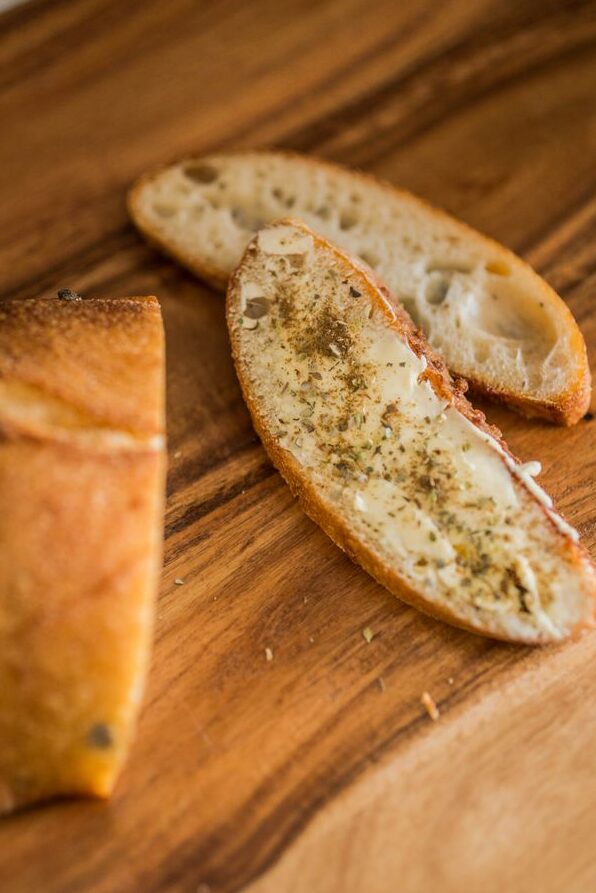
Garlic: Roasted garlic offers mellow sweetness and nutty depth, while raw minced garlic provides sharper pungency. Sulfur compounds in garlic deliver signature aroma and mild antimicrobial effects that interact subtly with the starter. Fresh heads yield the best results over pre-minced.
Butter or Oil: Fat tenderizes the crumb and carries garlic flavors. Unsalted butter creates a classic garlic bread profile, while olive oil suits herb-forward versions. Fats also extend shelf life by coating starches.
Cheese (Optional): Parmesan or mozzarella in sourdough garlic bread with parmesan adds umami and promotes browning through proteins and fats. These enhance Maillard reactions during baking for crispy garlic bread edges.
Herbs and Seasonings: Fresh parsley, oregano, or rosemary complement garlic without overpowering the sourdough tang. Dried herbs work in a pinch but use less due to concentration.
Fermentation breaks down starches into sugars that feed the starter, while garlic and fats moderate microbial activity for balanced flavor in the final homemade garlic sourdough loaf.
Step-by-Step Instructions
This easy sourdough garlic bread recipe produces one large loaf (approximately 950g dough). Timelines assume a 70-75°F (21-24°C) kitchen. Scale times for different temperatures.
Ingredients (Metric and US)
Levain Build (4-6 hours ahead or use active starter):
- 50g (¼ cup) active sourdough starter
- 100g (scant ½ cup) bread flour
- 100g (scant ½ cup) water
Final Dough:
- 450g (3¾ cups) bread flour
- 50g (⅓ cup + 1 Tbsp) whole wheat flour
- 325g (1⅓ cups) water (72% hydration)
- 120g (½ cup) ripe levain or active starter
- 10g (2 tsp) fine sea salt
- 15g (1 Tbsp) honey (optional)
Garlic Butter Topping:
- 1 large head garlic (or 8-10 cloves)
- 85g (6 Tbsp) unsalted butter, softened
- 3g (1 tsp) dried parsley or 10g (2 Tbsp) fresh chopped parsley
- 2g (½ tsp) dried oregano
- 1g (¼ tsp) red pepper flakes (optional)
- 40g (⅓ cup) grated Parmesan cheese (for sourdough garlic bread with parmesan)
- Salt to taste
For Roasted Garlic: Preheat oven to 400°F (204°C). Slice off the top of the garlic head, drizzle with olive oil, wrap in foil, and roast 40-50 minutes until soft and caramelized. Cool, then squeeze out cloves and mash.
Essential Tools and Equipment for This Recipe
Baking easy sourdough garlic bread at home does not require a professional kitchen, but having the right tools on hand makes the process significantly smoother, especially for anyone attempting sourdough for the first time.
A digital kitchen scale
This is the single most important tool for easy sourdough garlic bread. Volume measurements like cups and tablespoons vary too much between bakers to reliably hit the correct hydration level. A basic digital scale that measures in grams removes the guesswork and ensures the dough behaves the same way every time.
A Dutch oven or covered baking vessel
Trapping steam during the first part of baking is what gives easy sourdough garlic bread its crisp, blistered crust. A heavy Dutch oven with a lid works best, though a covered cast iron combo cooker or a large oven safe pot with foil over the top can also work in a pinch.
A banneton or proofing basket
While not strictly required, a banneton helps the shaped dough hold its form during the final proof, especially for a wetter dough like this one. A simple kitchen bowl lined with a well floured tea towel is a reliable substitute if a banneton is not available.
A bench scraper
This inexpensive tool makes handling sticky sourdough much easier. It helps lift and fold the dough during shaping without tearing the surface, and it is also useful for cleaning the work surface afterward.
A sharp lame or razor blade
Scoring the dough right before baking allows steam to escape in a controlled way, giving easy sourdough garlic bread its signature open crust pattern instead of random tearing. A simple razor blade taped to a skewer works just as well as a purchased lame.
An instant read thermometer
Since visual cues alone can be misleading, checking the internal temperature is the most reliable way to confirm the loaf is fully baked. This small tool takes the guesswork out of knowing when to pull the bread from the oven.
A small saucepan for the garlic butter
While not unique to sourdough baking, having a dedicated small pan ready for roasting garlic and mixing the butter topping keeps the process organized, especially since the garlic butter needs to be ready just before the final minutes of baking.
None of these tools are expensive or hard to find, and most home bakers already own several of them. Investing in even two or three of these essentials, particularly the kitchen scale and a covered baking vessel, makes a noticeable difference in how consistently this bread turns out from one bake to the next.
Step 1: Prepare the Levain
Combine active starter, flour, and water in a jar. Cover loosely and ferment until doubled with visible bubbles (4-6 hours). This strengthens the culture for reliable rise in easy sourdough garlic bread.
Step 2: Autolyse
Mix flours and water in a large bowl until no dry spots remain. Cover and rest 45-60 minutes. This step fully hydrates proteins and begins enzymatic breakdown for better extensibility and flavor development.
Step 3: Mix the Dough
Add levain, salt, and honey to the autolysed mixture. Use wet hands to fold and squeeze until cohesive (6-10 minutes). The dough starts shaggy and becomes smoother. Target dough temperature of 76-78°F (24-26°C).
Step 4: Bulk Fermentation
Cover and rest 30 minutes. Perform 5-6 stretch-and-fold sets every 30 minutes during the first 2.5 hours. Rotate the bowl between pulls to strengthen gluten evenly. Total bulk lasts 5-7 hours until dough increases 60-80%, feels airy, and shows bubbles. It should pass the windowpane test with a thin, translucent membrane.
Step 5: Pre-Shape
Turn dough onto a lightly floured surface. Gently fold edges to center forming a loose round. Flip seam-down and bench rest 25-35 minutes.
Step 6: Final Shaping
For a boule: Create surface tension by rotating with cupped hands. For a batard: Elongate gently. Place seam-up in a floured banneton. For garlic sourdough bread sticks, divide into 10-12 portions (70-80g each), roll into logs, and proof on a tray.
Step 7: Final Proof
Proof at room temperature 1-2 hours or cold retard 8-16 hours. Dough is ready when a gentle poke springs back slowly.
Step 8: Bake
Preheat oven and Dutch oven to 450°F (232°C) for 45 minutes. Score the loaf. Bake covered 20 minutes, then uncovered at 425°F (218°C) for 22-28 minutes until deep golden and internal temperature reaches 205-210°F (96-99°C).
Apply Garlic Butter: Mix mashed roasted garlic with softened butter, herbs, cheese, and seasonings. Five minutes before end of bake, spread generously over the top for garlic butter sourdough bread. Return to oven for final browning and crispiness.
Cool on a wire rack at least 2 hours before slicing to set the crumb in this crispy garlic bread.
Total Time: 12-24 hours (mostly passive).
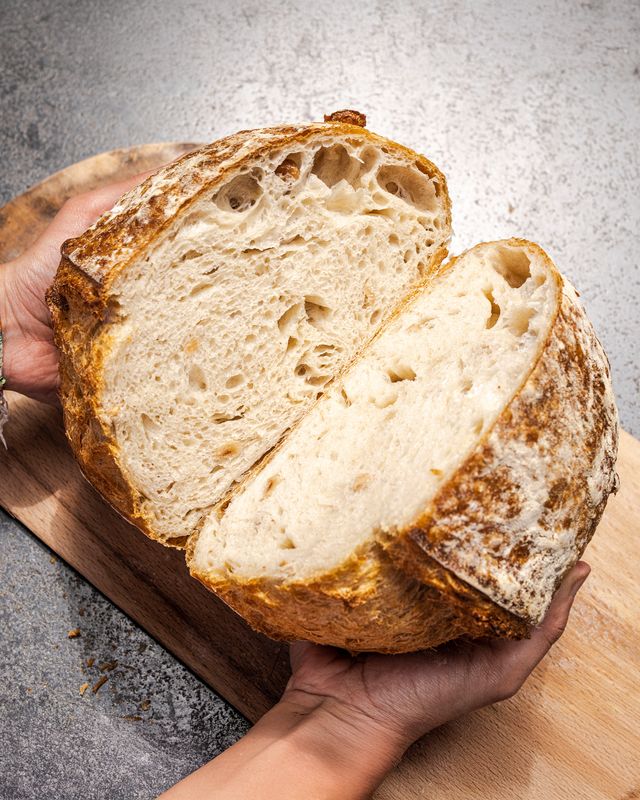
Sourdough Discard Garlic Bread Variation
For quicker results, use 180g unfed discard and add 4g (1 tsp) instant yeast. Shorten bulk to 2-4 hours. This sourdough discard garlic bread version maintains flavor with less planning while delivering excellent cheesy garlic bread results when Parmesan is included.
Cheesy Garlic Sourdough Bread and Pull-Apart Variations
Incorporate 80-100g cubed mozzarella or additional Parmesan into the dough during final folds for cheesy garlic bread. For pull-apart style, shape smaller balls, layer in a pan with garlic butter between them, and bake in a loaf or round pan at 375°F (190°C) for 30-35 minutes.
Garlic Herb Sourdough Bread and Bread Sticks
Add 10-15g chopped fresh rosemary, thyme, or chives with the garlic butter. For garlic sourdough bread sticks, shape logs, proof, score lightly, brush with butter, and bake on a sheet pan at 425°F (218°C) for 18-22 minutes until crisp.
Roasted Garlic Sourdough Loaf Adaptation
Double the roasted garlic for deeper flavor in roasted garlic sourdough loaf. Blend some into the dough during mixing and reserve the rest for topping. This creates pronounced sweetness that balances the sourdough tang beautifully in homemade garlic sourdough loaf.
Storage Tips
Store at room temperature in a cloth or paper bag for 3-4 days. The acidity helps resist mold. Freeze sliced loaves in airtight bags up to 3 months. Reheat slices in a 350°F (177°C) oven or toaster for restored crispness. Avoid refrigeration to prevent accelerated staling. Refresh day-old bread with a light water mist and brief oven warming.
Common Mistakes to Avoid with This Bread
- Using inactive starter leads to poor rise in any sourdough garlic bread recipe.
- Adding garlic too early can inhibit fermentation slightly due to antimicrobial properties—incorporate primarily in topping.
- Overproofing causes collapse; monitor closely during final proof.
- Inaccurate measurements disrupt hydration—always weigh for consistency in garlic butter bread.
- Slicing too warm compresses the crumb and makes it gummy.
- Insufficient steam in the oven prevents proper oven spring and crisp crust in crispy garlic sourdough bread.
- Overloading with cheese or butter weighs down the dough—balance carefully for optimal texture.
What to Serve with Easy Sourdough Garlic Bread
One of the most common questions after baking a fresh loaf is what to actually serve alongside it. This easy sourdough garlic bread works well in far more settings than a simple pasta side, and knowing a few reliable pairings can turn a single loaf into the centerpiece of an entire meal.
With soups and stews
The tangy crumb of sourdough garlic bread is ideal for dipping into tomato soup, minestrone, or a hearty lentil stew. The bread holds its structure even when soaked, unlike softer commercial loaves that tend to fall apart.
With pasta and Italian mains
This is the most familiar pairing, and for good reason. Serve slices alongside a red sauce pasta, baked ziti, or a simple aglio e olio to double down on the garlic flavor throughout the meal.
With South Asian curries and dals
For a fusion approach, easy sourdough garlic bread pairs surprisingly well with butter chicken, chickpea curry, or a simple daal. The garlic butter echoes the flavors already present in many South Asian gravies, while the sourdough tang cuts through the richness in a way that plain naan sometimes cannot.
As a standalone appetizer
Cut into smaller pieces and served warm with a side of marinara or garlic infused olive oil for dipping, this bread works well for gatherings and casual entertaining without needing anything elaborate alongside it.
With salads for a lighter meal
A simple arugula or Caesar salad alongside a few slices of garlic bread creates a light but satisfying lunch, especially when the bread is toasted just enough to add crunch without becoming heavy.
Turning leftovers into something new
Day old easy sourdough garlic bread does not need to go to waste. Cubed and toasted, it makes excellent garlic croutons for soups and salads. Sliced thin and layered with cheese, it can also be turned into a quick garlic bread grilled cheese, using the existing garlic butter flavor as a built in seasoning rather than adding anything extra.
Thinking beyond the obvious pasta pairing opens up far more ways to enjoy this loaf throughout the week, rather than treating it as a single use side dish reserved only for Italian dinners.
FAQs
1. Can pre-minced garlic substitute for fresh in this recipe?
Fresh or roasted garlic provides superior flavor and aroma. Pre-minced works but reduces complexity—use 50% more to compensate in garlic herb sourdough bread.
2. How do I adapt for higher hydration or different flours?
Increase water by 25-50g for more open crumb, but strengthen gluten with extra folds. Whole grain additions require slightly more water due to bran absorption.
3. Is it possible to make this fully yeast-leavened?
Yes, replace the starter with commercial yeast for a faster version, though it loses characteristic sourdough tang that defines easy sourdough garlic bread.
4. Why might the garlic flavor seem muted after baking?
Roasting mellows garlic while raw maintains punch. Combine both methods or apply more topping post-bake for stronger presence in sourdough garlic bread with parmesan.
5. How long does the dough keep in the refrigerator?
Cold retard up to 16-18 hours enhances flavor. Longer periods risk overproofing or drying—bring to room temperature briefly before baking.
This easy sourdough garlic bread recipe delivers bakery-quality results at home with straightforward techniques and rewarding flavors. The variations allow customization for any occasion while highlighting the versatility of sourdough. Bakers will return to this homemade garlic sourdough loaf repeatedly for its irresistible combination of tang, garlic, and crisp texture.